The Sun
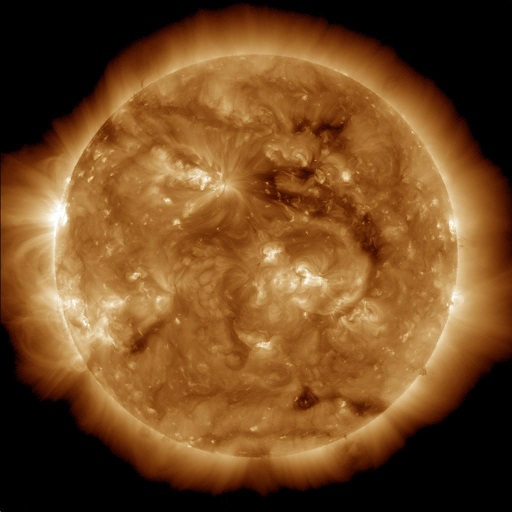
The Sun is the star at the center of the Solar System. It is a nearly perfect sphere of hot plasma, with internal convective motion that generates a magnetic field via a dynamo process. It is by far the most important source of energy for life on Earth. Its diameter is about 1.39 million kilometers, or 109 times that of Earth, and its mass is about 330,000 times that of Earth, accounting for about 99.86% of the total mass of the Solar System.
The Moon
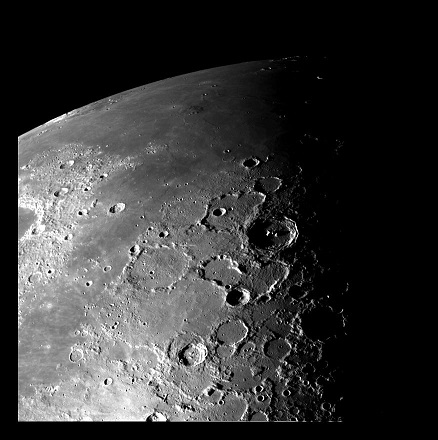
The Moon is Earth's only natural satellite. It is the fifth-largest satellite in the Solar System and the largest and most massive relative to its parent planet. The Moon is thought to have formed about 4.51 billion years ago, not long after Earth. It is in synchronous rotation with Earth, meaning that it always shows the same face to Earth, which is known as the near side. The near side is marked by dark volcanic maria that fill the spaces between the bright ancient crustal highlands and the prominent impact craters.
The Stars
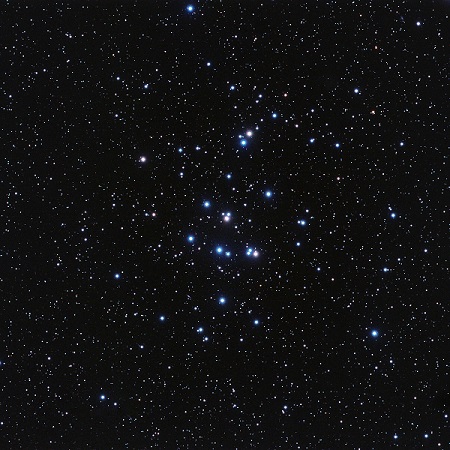
Stars are luminous spheres of plasma held together by their own gravity. They are the fundamental building blocks of galaxies, and they play a crucial role in the evolution of the universe. Stars are born from clouds of gas and dust, and they go through various stages of life, including main sequence, red giant, and white dwarf phases. The light from stars can be used to study the properties of the universe, such as its age, composition, and expansion rate.
The Planets
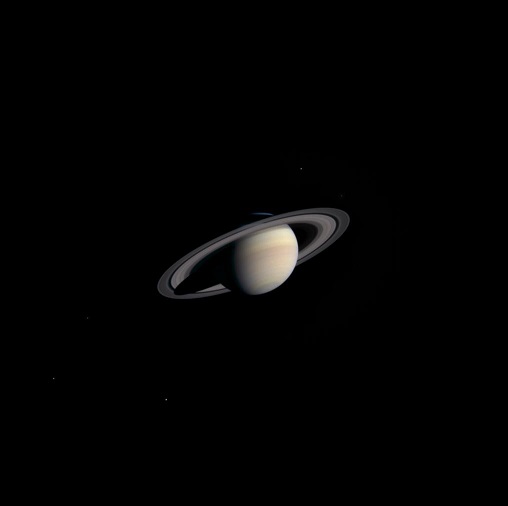
Planets are celestial bodies that orbit a star, are spherical in shape, and have cleared their orbital path of other debris. In our Solar System, there are eight planets: Mercury, Venus, Earth, Mars, Jupiter, Saturn, Uranus, and Neptune. Each planet has its own unique characteristics, such as size, composition, atmosphere, and number of moons. The study of planets is known as planetary science, and it helps us understand the formation and evolution of our own Solar System as well as the potential for life on other planets.
Nebulae
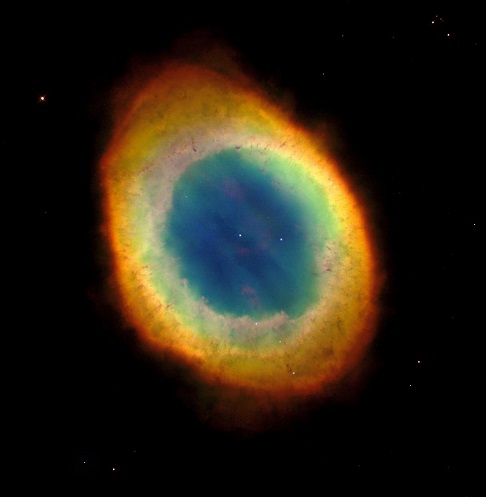
Nebulae are clouds of gas and dust in space. They are the birthplaces of stars, where gravitational collapse leads to the formation of new stellar systems. Some nebulae are the remnants of exploded stars, while others are regions where star formation is still actively occurring. The study of nebulae helps us understand the lifecycle of stars and the evolution of galaxies.
Comets
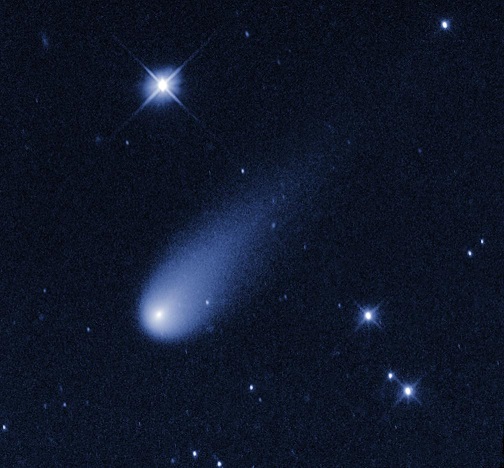
Comets are small icy bodies that orbit the Sun. When they approach the Sun, they develop a glowing coma and sometimes a tail made of gas and dust. Comets are believed to be remnants from the early solar system and can provide valuable information about its formation and evolution.